
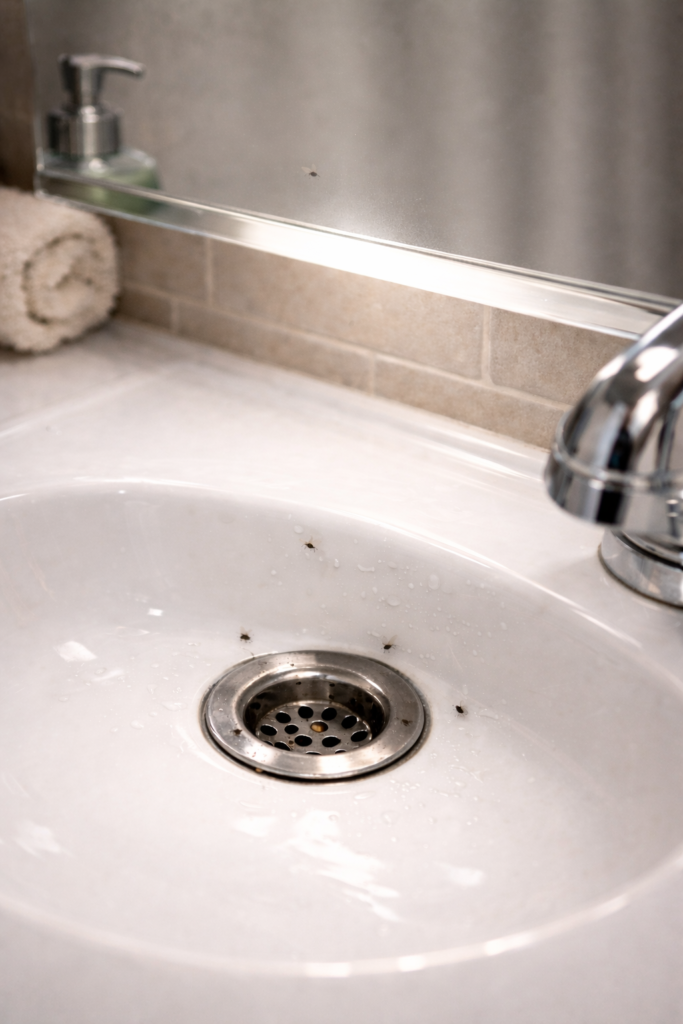
If you keep seeing tiny flying bugs in your bathroom, you may be dealing with gnats.
They often show up near:
- sinks
- shower drains
- bathtubs
- windows
- damp corners
- trash cans
- potted plants kept in bathrooms
The frustrating part is that they seem to appear out of nowhere — even in a bathroom that looks clean.
The good news is that bathroom gnats usually have a very specific cause, and once you identify where they’re coming from, they become much easier to eliminate.
In this guide, you’ll learn:
- what gnats in a bathroom usually are
- why they appear
- where they breed
- how to get rid of them
- how to stop them from coming back
What Are Gnats in the Bathroom?
“Gnats” is a general term people often use for small flying insects, but in bathrooms, they are usually one of these:
- drain flies
- fungus gnats
- moisture-loving flying gnats
- sometimes very small flies mistaken for gnats
That’s why identification matters.
Some bathroom gnats are coming from drains, while others may be coming from damp organic material, trash, or even houseplants.
If the bugs are not flying much and instead crawling near damp surfaces, you may also want to read Tiny Black Bugs in Bathroom? What They Are and How to Get Rid of Them.
Why Are There Gnats in My Bathroom?
Gnats are attracted to moisture, organic buildup, and damp hiding places.
That makes bathrooms one of the easiest places in the home for them to survive.
Here are the most common causes.
1) Dirty or Sludgy Drains
This is one of the biggest reasons people get gnats in the bathroom.
Over time, bathroom drains can collect:
- hair
- soap scum
- skin cells
- oils
- toothpaste residue
- biofilm and sludge
That buildup creates the perfect breeding environment for tiny insects.
In many cases, what people call “gnats” are actually drain flies, which breed in the organic slime inside drains.
If that sounds familiar, read Drain Flies in Bathroom: Causes and How to Get Rid of Them.
2) Excess Moisture and Humidity
Bathrooms naturally stay humid, especially if:
- the exhaust fan is weak
- the room stays damp after showers
- towels stay wet
- condensation forms on walls or windows
That kind of moisture attracts small insects and also creates the conditions for mildew, drain buildup, and organic decay.
If your bathroom also has a lingering odor, it may help to read Why Does My Bathroom Smell Musty? Causes and Solutions.
3) Standing Water or Damp Surfaces
Gnats often appear in bathrooms where small amounts of water sit unnoticed.
Check areas like:
- under the sink
- around the toilet base
- behind the trash can
- under bath mats
- around potted plants
- around leaking pipes
Even a little moisture can support bugs if it stays there consistently.
4) Bathroom Trash or Organic Debris
Bathrooms sometimes hold small amounts of organic waste that attract gnats, including:
- tissues
- hair
- damp cotton pads
- makeup wipes
- empty product containers
- grooming waste
If the trash stays damp or isn’t emptied often, it can become part of the problem.
5) Houseplants in the Bathroom
If you keep plants in your bathroom, the gnats may actually be fungus gnats.
These tiny insects breed in moist potting soil, especially when the soil stays wet for long periods.
Signs fungus gnats may be the problem:
- bugs flying around plants
- insects near the windowsill
- tiny black flies hovering around moist soil
What to do:
- let the soil dry out more between watering
- remove decaying leaves
- avoid overwatering
- consider moving the plant temporarily to test whether the bugs disappear
How to Tell Where Bathroom Gnats Are Coming From
Before trying to get rid of them, it helps to identify the source.
Here’s a simple way to narrow it down.
If gnats are mostly near the drain:
Likely source:
- drain buildup
- drain flies
- organic sludge in pipes
If gnats are mostly near plants:
Likely source:
- fungus gnats
- wet potting soil
If gnats are around the sink, trash, or damp corners:
Likely source:
- moisture
- hidden residue
- decaying organic material
If gnats increase after showers:
Likely source:
- excess humidity
- poor ventilation
- damp organic buildup
The key is not just killing the bugs — it’s finding what is feeding or breeding them.
How to Get Rid of Gnats in the Bathroom
Once you know where they are coming from, you can fix the problem much more effectively.
1) Clean the Drain Thoroughly
If the gnats are near the sink or shower drain, this should be your first step.
What to do:
- remove visible hair and debris
- scrub around the drain opening
- clean the stopper or drain cover
- flush with hot water
- repeat over several days if needed
The goal is to remove the organic film where the insects are breeding.
2) Dry Out the Bathroom More Quickly
Gnats thrive in bathrooms that stay damp.
To reduce moisture:
- run the exhaust fan during and after showers
- open a window if possible
- hang towels to dry properly
- remove wet bath mats
- wipe up standing water around sinks and counters
Even small moisture improvements can make a big difference.
3) Empty and Clean the Trash Can
If your bathroom trash can is contributing to the issue:
Do this:
- empty it more often
- clean the inside with soap and water
- dry it completely
- avoid leaving damp waste sitting too long
4) Check for Hidden Leaks
A small leak under the sink or around the toilet can create the perfect environment for gnats.
Check for:
- damp cabinet bottoms
- soft wood
- musty smell
- water stains
- hidden puddles
- moisture behind storage bins
If you also hear moisture behind walls, you may want to read Water Dripping Sound in Walls: What It Means and What to Do.
5) Use Traps if Needed
Traps can help reduce the number of adult gnats while you fix the source.
Common options:
- sticky traps
- small vinegar traps
- store-bought indoor gnat traps
These help monitor the problem, but they usually won’t solve it alone if the breeding source remains.
How to Prevent Gnats from Coming Back
Once the bugs are gone, prevention becomes much easier.
Best prevention tips
- clean drains regularly
- reduce bathroom humidity
- dry towels and bath mats fully
- empty trash often
- check for hidden leaks
- avoid overwatering bathroom plants
- wipe down damp surfaces more often
The more consistently you remove moisture and organic buildup, the less attractive the bathroom becomes to gnats.
When Gnats May Mean a Bigger Moisture Problem
Sometimes gnats are just a minor bathroom nuisance.
But in other cases, they can be a sign that something deeper is going on, such as:
- poor ventilation
- a hidden leak
- chronic moisture
- drain sludge
- mildew or mold-prone conditions
If you are seeing gnats repeatedly and also noticing:
- musty smells
- recurring dampness
- mildew
- bugs returning after cleaning
…then it’s worth investigating the moisture source more carefully.
Gnats in the bathroom usually appear for one reason: something damp is feeding them.
In most cases, the real source is one of these:
- dirty drains
- excess humidity
- damp trash
- overwatered plants
- hidden moisture
The key to getting rid of them is not just swatting the adults — it’s removing the moisture and organic buildup that lets them keep coming back.
Once you fix the source, the problem usually becomes much easier to control.
FAQ
Why do I have gnats in my bathroom?
Bathroom gnats are usually attracted by moisture, dirty drains, damp trash, or overwatered plants.
Are bathroom gnats the same as drain flies?
Sometimes. Many people call drain flies “gnats,” especially when they appear around sinks or showers.
Can humidity cause gnats in the bathroom?
Yes. High humidity creates the damp conditions that many small insects need to survive and breed.
Will bleach kill bathroom gnats?
Bleach may kill some insects on contact, but it usually won’t solve the problem unless the breeding source is removed.
How do I stop gnats from coming back?
Clean drains, reduce moisture, dry wet surfaces, check for leaks, and remove any damp organic buildup.